




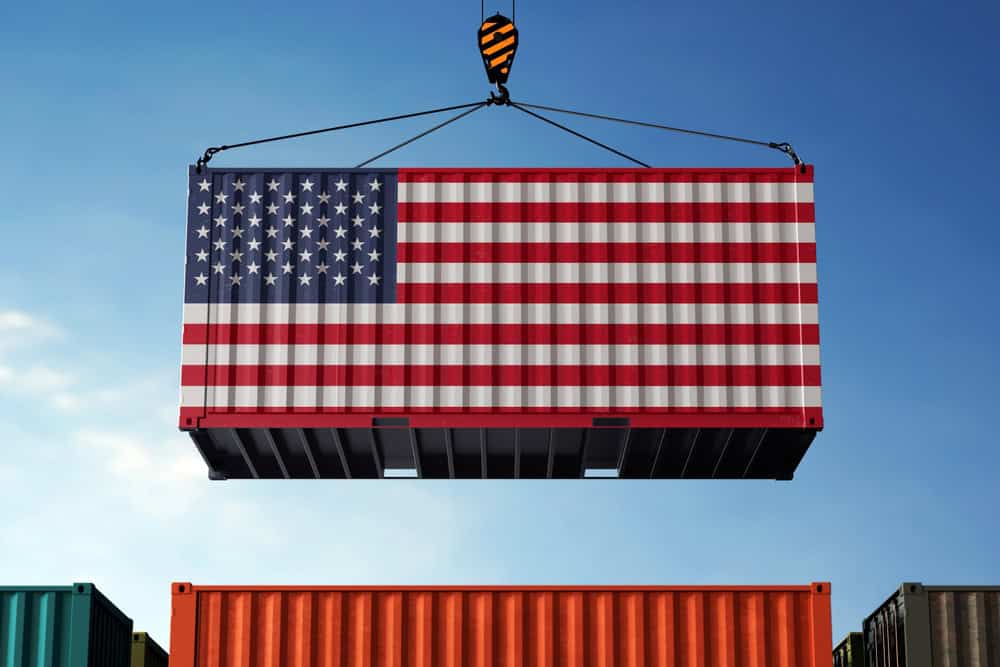
Tomorrow, Tuesday, November 3rd, the United States will hold crucial midterm elections. This week’s elections come just about two years after U.S. President Donald Trump won a second term. During this election cycle, Trump’s global trade policies – particularly tariffs and trade barriers – are likely to weigh as one of the biggest issues on voters’ minds. So, how will this year’s midterm elections likely affect U.S. trade policy and global trade?
Trump’s second term trade policies and how they are driving the U.S. midterms
When President Donald Trump won his second term two years ago, President Joe Biden had dealt with persistent inflation from the Covid pandemic. Trump promised to reduce inflation. But, during this second term, many of Trump’s trade-related policies – particularly tariffs on a wide swathe of countries – exacerbated inflation on American businesses and consumers, as many tariff costs are passed directly to both businesses and consumers.
As a result, poll after poll shows that American voters rate inflation and the cost of living as one of their largest issues. As is typically the case with a second term U.S. midterm, the President’s opposing party – in this case Democrats – is favored to win the midterm elections. Voters say they are looking for Democrats to solve the problems of inflation and overall trade policy.
How a Democratic Party win in the midterms would affect tariffs
Should Democrats win a majority in Congress – whether in the House of Representatives or the Senate – one thing is nearly certain: the Congress will take votes on whether to formally disapprove of many of Trump’s tariffs that have been enacted over the past two years.
One big question: do these votes matter, and will they really change tariff policy? In short, they matter by putting pressure on the Trump administration to relax its trade policies and promote lower prices on American businesses and consumers. However, they generally will not force the Trump administration to rollback all tariffs.
How would a Democratic Party-controlled Congress deal with trade policy and laws?
To force President Trump to rollback many of his tariffs, the actual law that allows the U.S. President to enact tariffs will need to be re-examined and changed. For example, during the first year of Trump’s second presidency, the International Emergency Economic Powers Act of 1977 (IEEPA) was used to enact many of the global tariffs. An act of Congress could change that. During the second year of the presidency, the Tariff Act of 1930, as well as Section 232 of the Trade Expansion Act, were both used to justify other rounds of tariffs. Those two laws would have to be changed by Congress.
How hard is it to change tariff law through Congress?
Many times, Congress re-writes the law to update economic and other policies. It references the existing laws in creating a new law and can “strike out” provisions in old laws through new legislation. If Democrats win control of Congress this week, updating these existing tariff laws is moderately difficult – but not impossible.
First, Congress would need to muster the votes to pass any tariff-related legislation out of committees – smaller groups within Congress that craft new laws and send them to the full Congress for approval or denial. Democrats could do that without any Republican votes – assuming all Democrats are on board. Then, the full Congress would vote and if 218 members vote yes in the House, the bill would go to the Senate, where things get more complicated. In the Senate, 60 votes would be needed for general legislation – unless Democrats used the reconciliation process to modify the law, in which case only 51 votes are necessary. In the 60-vote scenario, Republican support would likely be needed.
Passing a symbolic resolution of disapproval – which would put pressure on the administration but not undo the tariffs directly – would only take 51 votes and is the simplest method to put pressure on Trump.
Then, of course, any legislation passed by Congress could be vetoed by Trump, unless two-thirds of the Congress override the veto – a rare occurrence.
Other tools available for Congress to exercise tariff policy oversight
If Democrats win control of Congress, the committees in Congress will be used to conduct oversight of tariff policy. Congress can do that by calling prominent figures from the Trump administration, the private sector, and other parts of government, into Congress to testify on tariff policy and how it is affecting U.S. businesses and consumers.
Having prominent figures testify on tariffs and trade will pressure the Trump administration to potentially modify tariff policy – particularly if the hearings result in bad press for the U.S. government. So, testimony and oversight can be powerful tools to push tariff policy in a certain direction.