




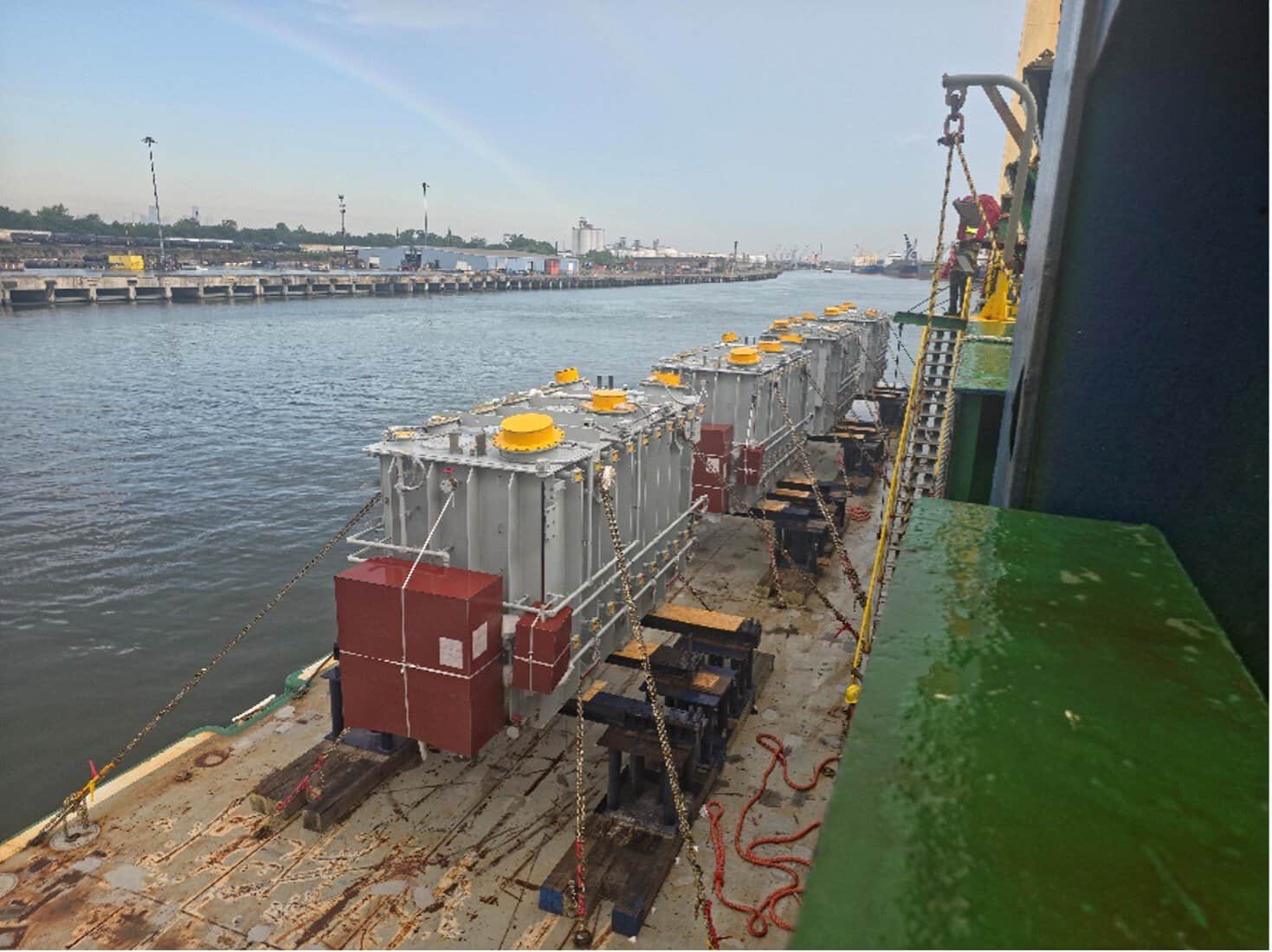
The rapid expansion of artificial intelligence (AI) is driving unprecedented demand for data centers, electrical infrastructure, and the specialized logistics required to support them. The MTS Logistics Projects Division is currently managing the U.S. inland transportation and final installation of 16 large transformer units for a major AI data center project in the Greater Memphis area.
All sixteen of the units were manufactured in China and then imported into the U.S. From their arrival at the U.S. port, the MTS Projects Division assumed responsibility for coordinating the inland logistics all the way through to the final delivery and placement of the transformers. The scope included port handling, inland barge transportation, transloading too specialized transportation equipment, final-mile heavy haul transportation, and jack-and-slide foundation setting. Projects of this scale require significantly more than just arranging transportation. Route planning, marine operations, permitting, specialized equipment, site coordination, engineering, securement, transloading, and final placement all must work together around the construction schedule. Recently though, another factor is becoming increasingly important: where critical electrical equipment is manufactured and how it will be used once it reaches the U.S.
A Major Change in U.S. Electrical Equipment Policy
On August 26th, 2026, the White House issued Executive Order 14421 titled “Declaring a National Emergency to Secure the United States Bulk-Power System.” The order specifically cites the rapid growth of data centers, artificial intelligence, advanced manufacturing, and defense production as increasing the country’s dependence on reliable electrical infrastructure. That makes the order particularly relevant to projects like the one MTS Logistics is currently supporting.
The Executive Order also covers certain foreign produced power system electrical equipment and specifically identifies equipment such as substation transformers, grid connected inverters, battery energy storage systems, generators, high-voltage circuit breakers, protection and control equipment, and certain uninterruptible power systems supporting critical infrastructure.
What the Executive Order Does Not Do
A key distinction is that the order does not create a blanket prohibition on every transformer or piece of electrical equipment manufactured outside the U.S. Instead, it authorizes the U.S. Department of Energy to prohibit or condition acquisitions, imports, transfers, or installations when specific criteria are met. This includes a connection to a Covered Foreign Entity and a determination that the transaction presents an unacceptable national-security risk to the U.S. The definition of the bulk power system also generally focuses on interconnected transmission infrastructure, including transmission lines rated 69 kV or above, while facilities used solely for local electric distribution are excluded.
For that reason, the fact that electrical equipment was manufactured in China does not, by itself, establish that a particular shipment is prohibited under Executive Order 14421. Other factors such as equipment type, electrical application, supplier relationships, software/firmware, remote access capabilities, and the nature of the transaction can all become relevant.
The Rules Are Still Being Developed
The implementation framework is still evolving as you read this sentence. On September 9th of this year, the U.S. Department of Energy issued a formal request for industry input on how the Executive Order should be implemented. DOE is specifically examining equipment scope, covered transactions, foreign ownership and control, existing equipment, licensing, mitigation measures, pre-qualification, domestic manufacturing capacity, supply-chain risk, and the other factors already previously mentioned.
So far, comments will remain open through October 9th. Executive Order 14421 also directs DOE to publish implementing rules or regulations as needed within 120 days of the August 26th order. This means importers, utilities, EPC contractors, manufacturers, data center developers, and logistics providers should be watching the regulatory process very closely in the months to come.
What This Means for Future Transformer Projects
For project logistics, compliance discussions may now need to begin before cargo ever leaves the factory. Historically, the primary planning questions might have been dimensions, weight, port capability, vessel availability, route clearance, permits, crane or jack-and-slide requirements, and construction schedules. Yet going forward, major electrical infrastructure projects may increasingly need to establish additional information earlier in the procurement cycle. This could include the following details:
- Country of manufacture and component origin
- Manufacturer and supplier ownership or control
- Transformer voltage and intended electrical application
- Software, firmware, monitoring systems, and remote-access capabilities
- Date and structure of the underlying equipment transaction
- Potential DOE licensing, mitigation, or prequalification requirements
For large transformers with long manufacturing lead times, discovering a regulatory problem after the equipment has already been produced or shipped could create substantial schedule and financial exposure.
Project Logistics Is Becoming Part of the Risk Strategy
The picture supplied at the start of this article represents four transformers moving through one stage of a much larger logistical spiderweb. However, it also represents where the project cargo industry is heading. AI infrastructure, data centers, grid expansions, BESS projects, generation facilities, and new manufacturing plants are creating enormous demand for these types of transformers and other electrical equipment. At the same time, the U.S. is increasing scrutiny of the supply chains behind that equipment.
For the MTS Logistics Project Division, that means our role cannot stop at just moving cargo. It means understanding the project’s entire logistics chain, identifying potential constraints early, coordinating with every stakeholder involved, and helping customers build transportation strategies that can adapt as the ongoing regulatory environment changes. From U.S. port arrival to final setting on the foundation, MTS Logistics will continue to manage the complete project movement.