





1. TPX Suspension is more than just the loss of 4,400 TEUs per week
Many market participants focus solely on the nominal capacity reduction:
- Approximately 4,400 TEUs per week
- Around 17,600 TEU per month
- Equivalent to roughly 2,200 FEU per week
However, the real market impact extends well beyond these figures.
The TPX service offered one of the few dedicated routings: Cai Mep to Busan to Long Beach
with the following advantages:
- Competitive transit time
- Direct access to the U.S. West Coast
- Strong focus on Vietnam and Korea export cargo
- Concentration of major Vietnamese export commodities
As a result, once TPX is withdrawn:
- One FEU diverted from TPX does not automatically equate to one FEU that can be seamlessly absorbed by another service.
- Cargo will be redistributed to services that are already operating at high utilization levels.
For example:
- TPX utilization: approximately 95%
- Alternative services: approximately 88-92%
Redirecting TPX volume into existing networks could push overall utilization across the trade lane to 95-100%.
This is the real driver behind:
- Higher freight rates
- Space shortages
- Increased rollover risk
- Longer booking lead times
In other words, the market impact will likely be greater than the simple capacity reduction suggests.
2. The Alliance Is Likely the Biggest Beneficiary
Among all carriers serving the Vietnam-U.S. trade, The Alliance appears positioned to benefit the most from TPX’s withdrawal.
Strong Network Position
The Alliance currently maintains a strong network presence across:
- Cai Mep
- Haiphong
- Los Angeles
- Long Beach
- Oakland
These are exactly the gateways served by TPX.
Customer Profile Alignment
TPX primarily supported cargo segments such as:
- Furniture
- Footwear
- Garments
- Consumer goods
- E-commerce
These are also core market segments where The Alliance competes aggressively.
Operational Capability
Unlike some carriers that rely on multiple transshipment points, The Alliance operates attractive alternatives including:
- VSE (Vietnam Shuttle Express)
- PS7
Both services are well positioned to absorb displaced TPX cargo.
Expected Cargo Migration
Following the TPX suspension, cargo is expected to shift primarily in the following order:
1. The Alliance
2. Existing Maersk/Gemini services
3. ZIM
4. MSC
5. CMA CGM / COSCO / OOCL
3. October 2026 Will Be the Most Critical Period
Many market participants assume the entire fourth quarter will experience the same level of disruption. I disagree.
Key Timeline
September 29, 2026
- Final TPX sailing
October 1-7, 2026
- Golden Week holiday period
Weeks 41-43
- Market adjustment and backlog recovery period
This period will likely see:
- Container equipment imbalances
- Booking reallocations
- Schedule disruptions
- Increased ETD changes
- Higher rollover activity
Market Impact by Month
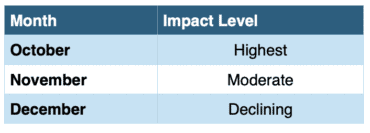
By December 2026, most carriers and shippers should have fully adjusted to the new capacity environment.
4. Furniture Will Be the Most Affected Segment
Among Vietnam exporters’ industry sectors, furniture exporters are expected to face the greatest challenges.
Why is Furniture Cargo Vulnerable?
Furniture shipments are typically:
- Heavy cargo
- Predominantly loaded in 40HC containers
- Space-consuming
- Highly dependent on schedule reliability
This includes commodities such as:
- Home furniture
- Kitchen cabinets
- Mattresses
- Sofas
- Ready-to-assemble furniture
When capacity tightens, carriers tend to prioritize:
- Higher-yield cargo
- Lighter-weight commodities
- Premium-paying customers
As a result, furniture shippers often experience:
- Waiting lists
- Booking rejection
- Rollover risk
- Premium space surcharges
Almost of the biggest local NVOCCs & forwarders now should therefore engage key furniture accounts immediately, before October capacity pressure intensifies.
MTS Vietnam stands ready to assist with your needs regarding these changes
MTS Logistics Vietnam can assist with your questions, issues, and strategies relating to these changes in U.S.-Vietnam trade. Click here to contact MTS Vietnam.