




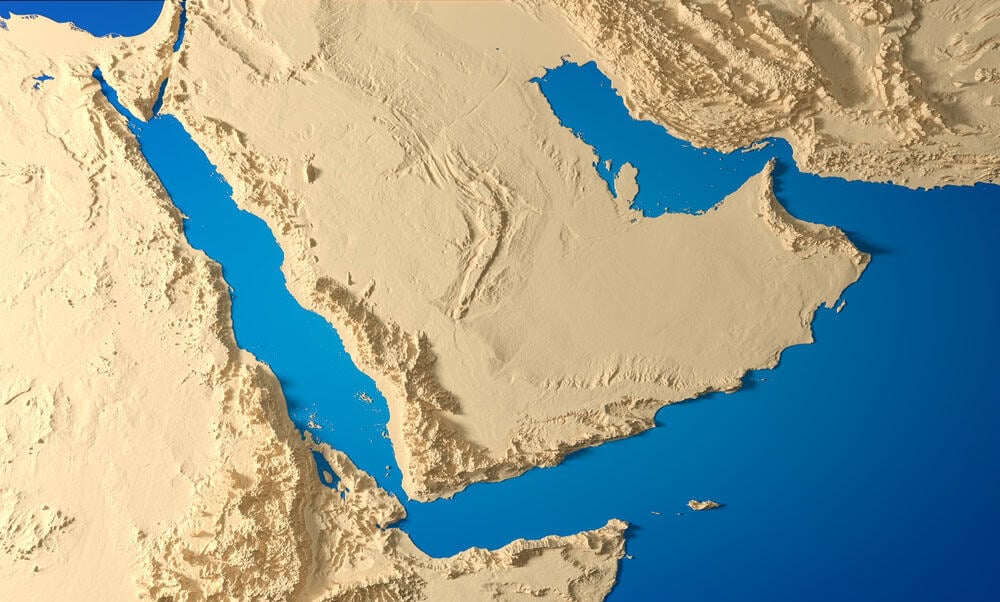
Those who were hoping for a calmer start to fall in the Middle East saw the opposite this week, as two areas of critical infrastructure were threatened by conflict. The Bab al-Mandeb Strait, which connects the Red Sea to the Gulf of Aden and the Indian Ocean, and the Saudi-controlled East-West Pipeline, which transport oil through one of the world’s largest oil-producing countries, were both affected by violence and threats. As a result, world energy markets saw themselves in turmoil, and global trading partners are concerned about the impacts of these threats against global trade and logistics.
The Bab al-Mandeb Strait
While the Strait of Hormuz became a household name this year, the Bab al-Mandeb Strait is much less known. It’s just as critical, and arguably more important, to global trade as the more-known waterway. A crucial link between the Red Sea, the Gulf of Aden, and the Indian Ocean, the Bab al-Mandeb Strait transports crude oil, automobiles, and other commodities through part of the Middle East. Nearly 9 percent of global trade passes through Bab al-Mandeb.
While some parts of Yemen has not been under Houthi rebel control over the past few years, in recent weeks, the Houthis have made territorial gains along the Yemeni coast. As a result, control of the Bab al-Mandeb Strait is threatened – the Houthis have a chance to take full control of the crucial strait. The Iranian government is also trying to raise the stakes against the U.S. in its monthslong conflict, and control of the Bab al-Mandeb Strait would give the Iranians more leverage in controlling global shipping.
Concerns over control of the Bab al-Mandeb Strait sent global oil prices skyrocketing this week, back after $100 per barrel, at a time when American consumers are paying some of the highest gas prices since Russia’s invasion of Ukraine in early 2022.
The Saudi East-West Pipeline
While concerns over the Bab al-Mandeb Strait were mounting, in Saudi Arabia, the Saudi East-West Pipeline – a crucial oil pipeline – was struck by Iranian-backed rebels who used drones to damage the pipeline. Saudi Arabia operates this crucial pipeline, which can move 7 million barrels of oil each day from Saudi Arabia’s vast oil fields towards the Red Sea, where it’s loaded onto oil tankers to be transported around the world.
Although the Saudis temporarily shut down the East-West Pipeline for safety reasons, the country quickly noted it was working on a bypass solution. Actual repairs to the pipeline could take months – and that’s assuming no other attacks by drones or other methods. If the East-West pipeline were further damaged, oil prices could increase even higher than this week’s levels. For context, the highest oil prices per barrel were reached in 2008, when oil nearly reached $140 per barrel prior to that year’s financial crisis.
What comes next
The U.S. may take further action to protect both pieces of critical infrastructure, although U.S. military assets are currently stretched thin due to multiple conflicts. The Trump Administration is planning to meet on the sidelines of next week’s United Nations General Assembly meetings in New York, with Saudi Arabia, Yemen, and others regarding the conflict and threats against infrastructure.
Oil prices are likely to remain high. For now, rebels and nation-states have shown that they can and are willing to use critical infrastructure – particularly related to oil – to achieve more leverage against the U.S. and partners in the Middle East and beyond.