




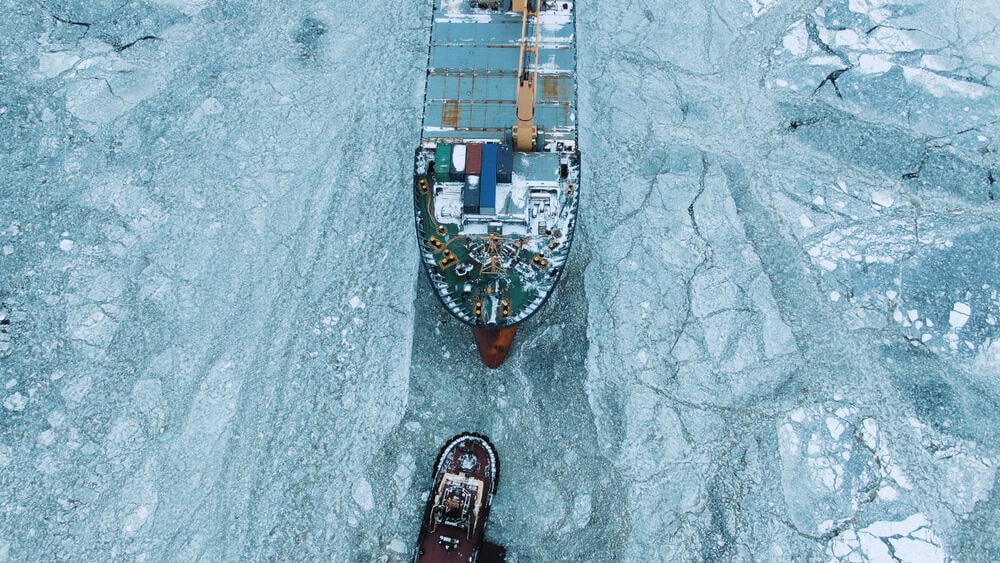
Approximately 80% of global trade, by volume, is transported by sea. For this reason, any disruption in maritime transportation can affect not only ships but the entire global economy, from energy markets to food supplies. Geopolitical tensions, droughts, and security issues in the Suez and Panama Canals in recent years have also highlighted just how dependent global trade is on a few critical chokepoints.
New shipping routes opening up as the climate changes
The future of global trade is being shaped not only by the construction of new ports and railways, but also by new sea routes opening up in the northern areas of the world. The Suez Canal, the Strait of Hormuz, and the Strait of Malacca, which have been used traditionally for many years, are important for maritime trade. Regional tensions that have existed for the past few years have resulted in significant challenges in terms of time and cost. Climate change and geopolitical tensions are focusing attention on the northern part of the world: the Arctic sea routes.
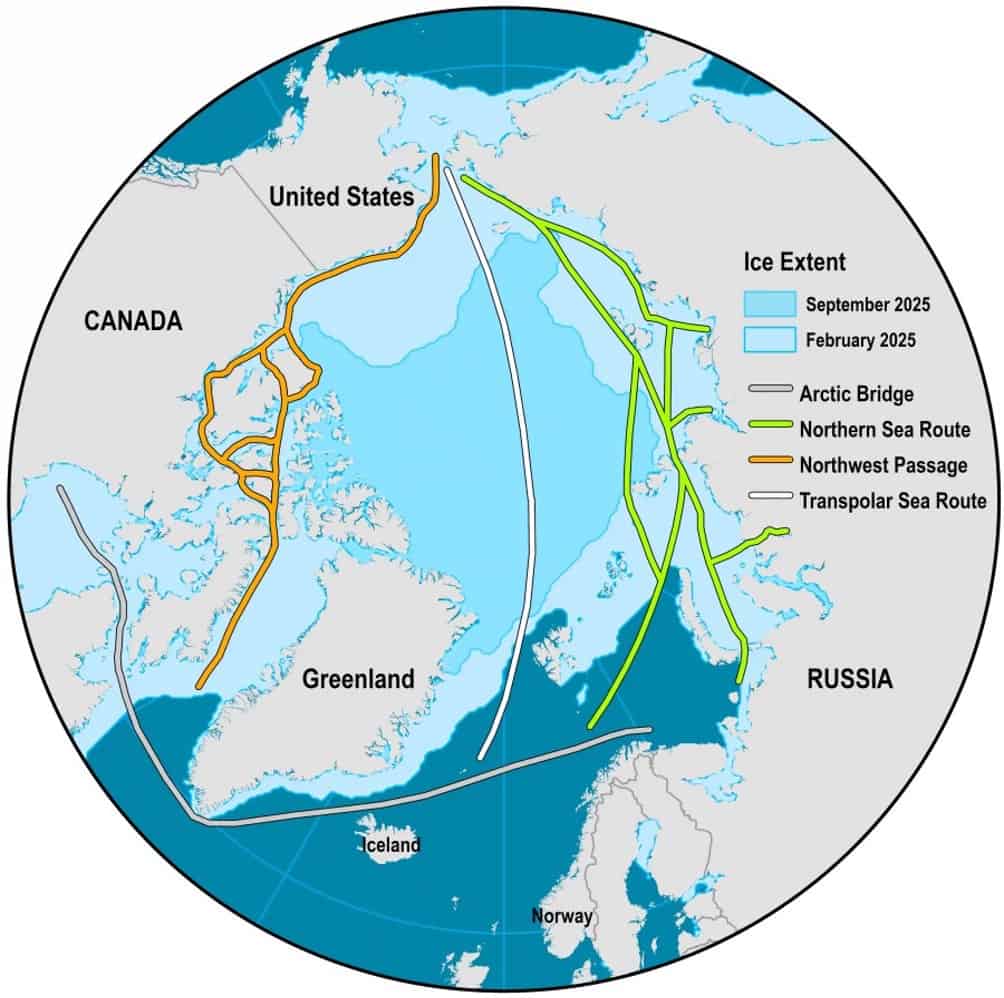
The melting of sea ice in the Arctic Ocean is making the Northern Sea Route (NSR) an increasingly important option for shipping between Europe and Asia. This route, which runs along Russia’s northern coast, can significantly shorten the distance between Europe and East Asia compared to the traditional route through the Suez Canal.
For example, on the Hamburg-Yokohama route, the Northern Sea Route is approximately 7,356 nautical miles long, while the Suez Route is approximately 11,585 nautical miles long. Under favorable conditions, reducing the voyage time from 32 days to approximately 18 days can generate significant advantages in terms of fuel consumption and transit times.
Beyond the Shortest Route
It is still too early to describe the Arctic route as an alternative to existing routes.
Although the melting in sea ice has made navigation easier, ice conditions remain variable. The technical specifications of ships, the need for icebreakers, limited port infrastructure, insurance costs, and search-and-rescue capabilities all affect the economic feasibility of the route.
Consequently, the future of the Arctic route will not be determined simply by the “shorter distance” argument. Cost, security, climate, infrastructure, emissions, and the vulnerability of global trade will all be factored into the equation.
The Arctic is not currently at the center of global maritime trade. However, the retreat of sea ice and the increasing risks faced by traditional trade corridors are paving the way for the emergence of a new trade front in the north. In the coming years, the main issue will not be whether the Arctic route will replace the Suez Canal, but rather to what extent it can reduce global maritime trade’s dependence on a single route.