




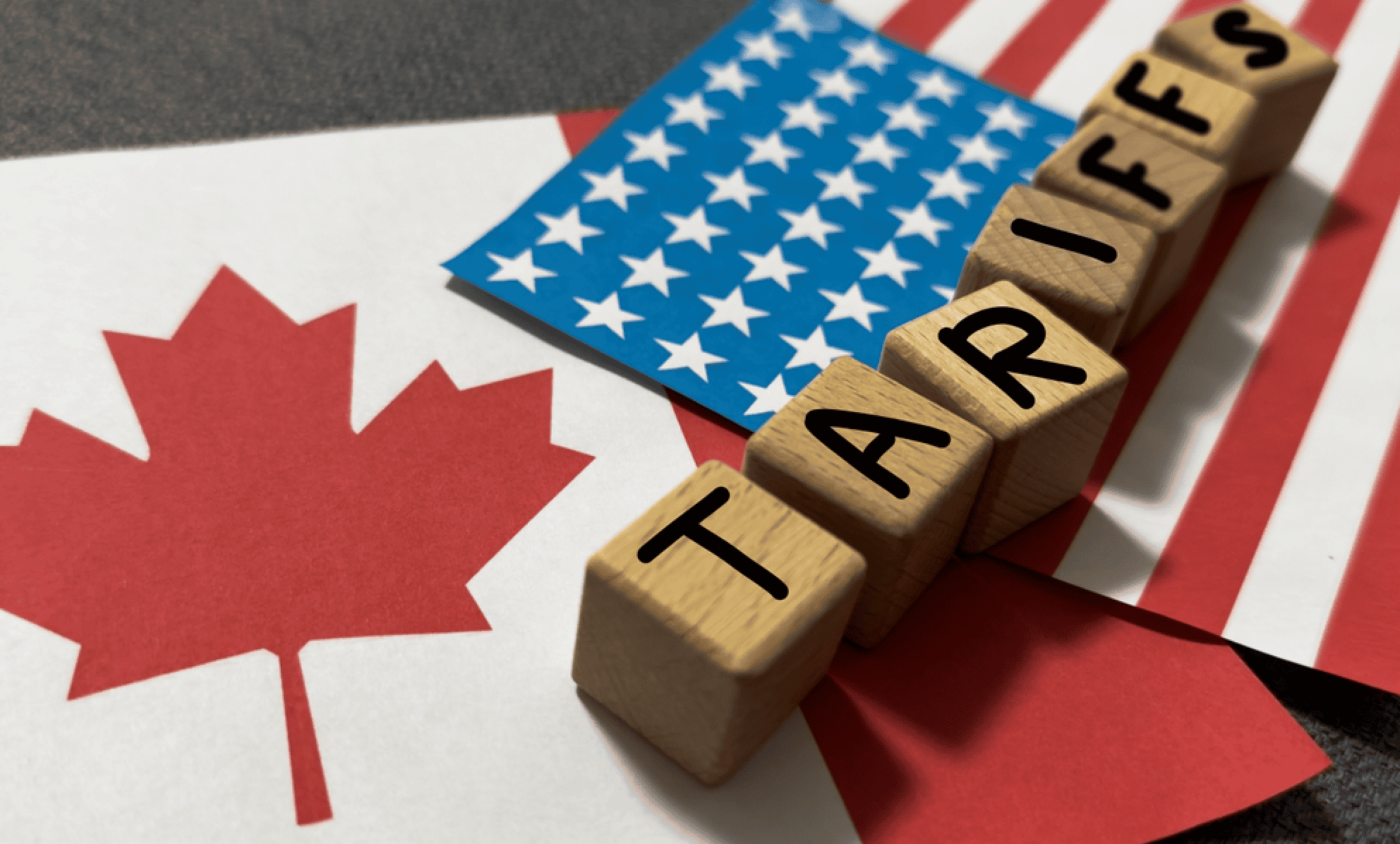
After losing the landmark tariff case at the U.S. Supreme Court earlier this year, President Donald Trump has another tariff-related legal battle on his hands, this time pertaining to tariffs on Canadian goods.
Trump’s 2026 tariffs on Canadian goods are being challenged in court
President Trump imposed tariffs on everything from Canadian liquor to hockey sticks, paper goods, dairy products, and other products earlier this year, escalating a yearslong economic war of words with the United States’ northern neighbor.
After the U.S. Supreme Court ruled that many of his 2025 tariffs were unconstitutional, the Trump administration took a new legal approach. Instead of using the 1977 International Emergency Economic Powers Act (IEEPA) to impose the tariffs, as the president did last year, the new tariffs on Canadian goods were envisioned under the Tariff Act of 1930, specifically Section 338 of that law. The law covers “unreasonable foreign practices”. The Trump Administration has used that law to enforce the latest round of tariffs on Canadian goods, prompting the lawsuit.
The new lawsuit against Trump’s tariffs on Canada
The latest lawsuit against the Trump administration’s tariffs was brought by the Liberty Justice Center, which is the same organization that successfully sued to block Trump’s tariffs against numerous countries earlier this year.
In the lawsuit, the Liberty Justice Center asks the Court of International Trade to stop President Trump’s tariffs on Canadian goods and argues that the stringent tariffs are complicating U.S. companies from doing business with Canada.
The group argues specifically that the Tariff Act of 1930 does not give the U.S. president the authority to impose tariffs unilaterally against a wide swathe of Canadian goods, especially without a detailed review of the foreign country’s (in this case, Canada) trade practices.
The lawsuit was filed on behalf of a New Jersey food importer, Gellert Global Group, which is arguing economic harm from the new tariffs.
The lawsuit still has a long way to go before real-world effects, if any, are felt
In the past, the Trump administration lost numerous tariff-related cases in front of the Court of International Trade but ultimately chose to ignore the rulings by continuing to appeal them. Only after the major tariff case reached the U.S. Supreme Court did the U.S. government move towards real-world consequences: tariff refunds.
Even after the U.S. Supreme Court ruled the tariffs unconstitutional, it took the U.S. government months to set up a tariff refund system that was easy to use for all parties. And, to this day, many companies are still waiting for their tariff refunds.
If the courts side against Trump again this time, it’s likely that President Trump will try and find new angles to impose tariffs against Canada, and other countries, so the uncertainty brought on by tariffs is likely to persist.