




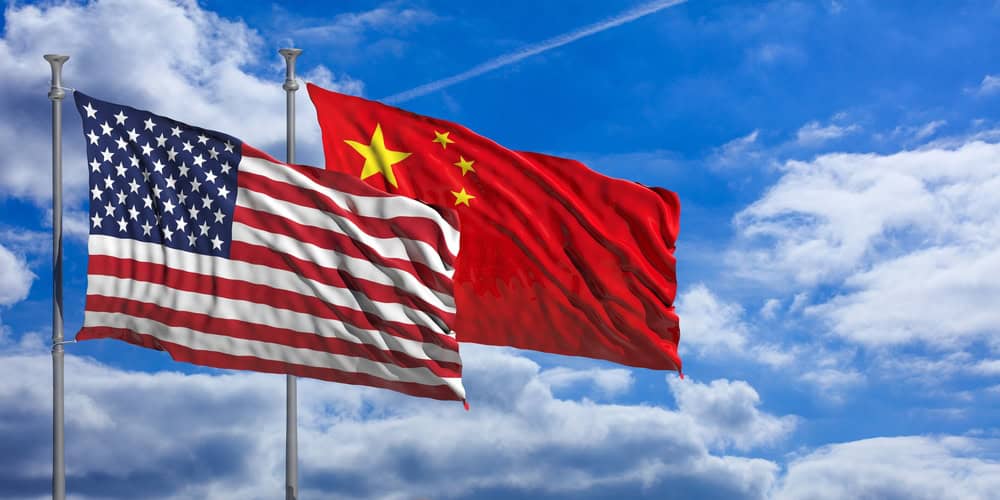
President Donald Trump was traveling back to the U.S. on Friday, just two days after a short trip to China where he hoped to make progress on key issues with Chinese President Xi Jinping. The so-called “summit” was announced earlier this year after Trump and Xi spoke amid a chilly period of U.S.-China relations.
Despite positive statements released by both the U.S. government and Chinese governments touting “substantial progress” on key issues, no major announcements were made towards ending two of the biggest pieces of uncertain for shipping and logistics: the war in Iran and U.S.-China tariffs.
The Iran War
Amidst the summit between Trump and Xi, the main issue looming was the Iran War. Long time, both the U.S. and China stand to lose more from a prolonged war in terms of reduced trade, higher shipping costs, longer shipping times, and general disruption.
Trump, for his part, has publicly said he did not pressure President Xi to push for an end to the Iran conflict. However, it is clear that the U.S. is seeking China’s help as part of any resolution in Iran and the broader Middle East, due to China’s outsized influence buying (and in many cases transporting) Iranian oil globally.
Shipping disruptions in the Middle East have affected the entire global economy, and China has just as much to lose as the U.S. when it comes to a disrupted shipping market.
Trump is also reportedly weighing a return to military strikes in Iran, a development that would prolong a period of shipping uncertainty in the region and globally.
U.S.-China tariffs
When the summit between Trump and Xi was first announced, most observers believed that trade policy would be the main economic focus. After all, the first year of Trump’s second presidency focused heavily on imposing tariffs across many U.S. trading partners, with China at the forefront of the target list.
For now, this week’s conference between Trump and Xi did not appear to produce a breakthrough on trade relations, although President Xi is scheduled to visit the U.S. later this year. Trump publicly stated that he did not discuss tariffs with his Chinese counterpart, although it is likely the topic did come up here and there behind the scenes.
For now, U.S. trade partners and businesses will have to wait a little longer to see if U.S.-China tariffs get reduced, or if a “grand bargain” can be reached between the U.S. and China this year.
Other geopolitical risks for trade
One other elephant in the room discussed by the U.S. and Chinese presidents was Taiwan. Reportedly, Chinese President Xi Jinping warned President Trump that the Taiwan situation had to dealt with correctly or that it would really harm U.S.-China relations.
If the situation with Taiwan were to “get hot” and military action was implemented, the global economy would almost certainly be negatively affected. Trade in the region would be affected, and shipping routes near Taiwan and China would be disrupted.
There’s also the possibility that a military blockade or other military action by China could affect the technology supply chain as many technology products originate from Taiwan and precious metal supply chains will be disrupted.